
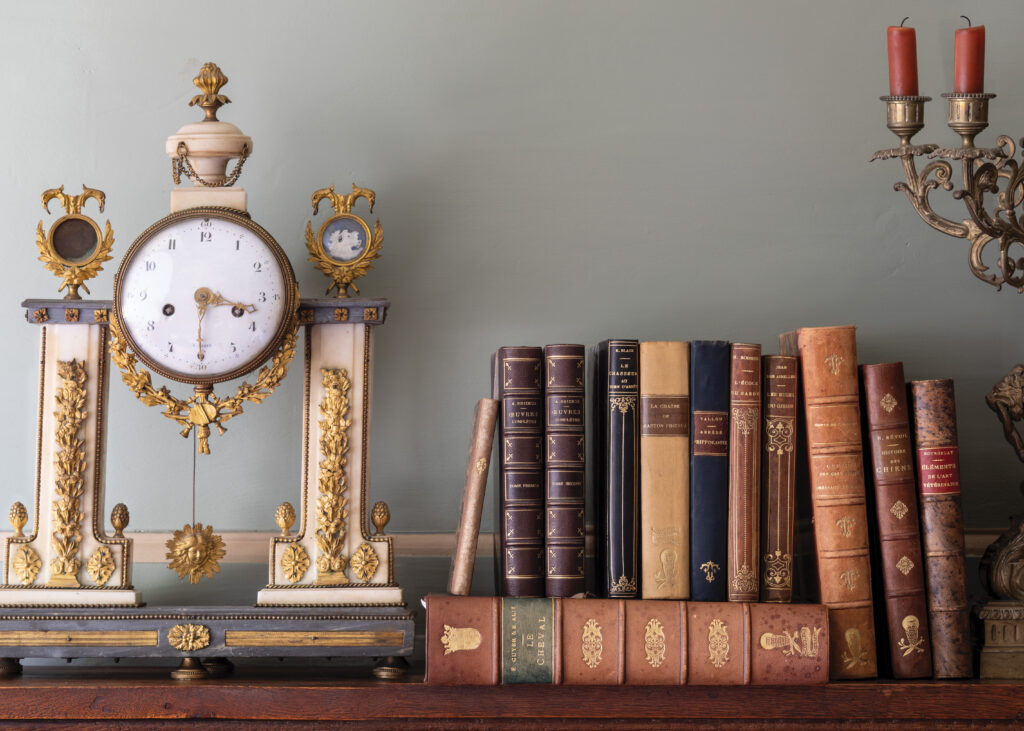
 Through centuries of change, the rhythmic ticking of mantel clocks has marked memorable events in homes both large and small.
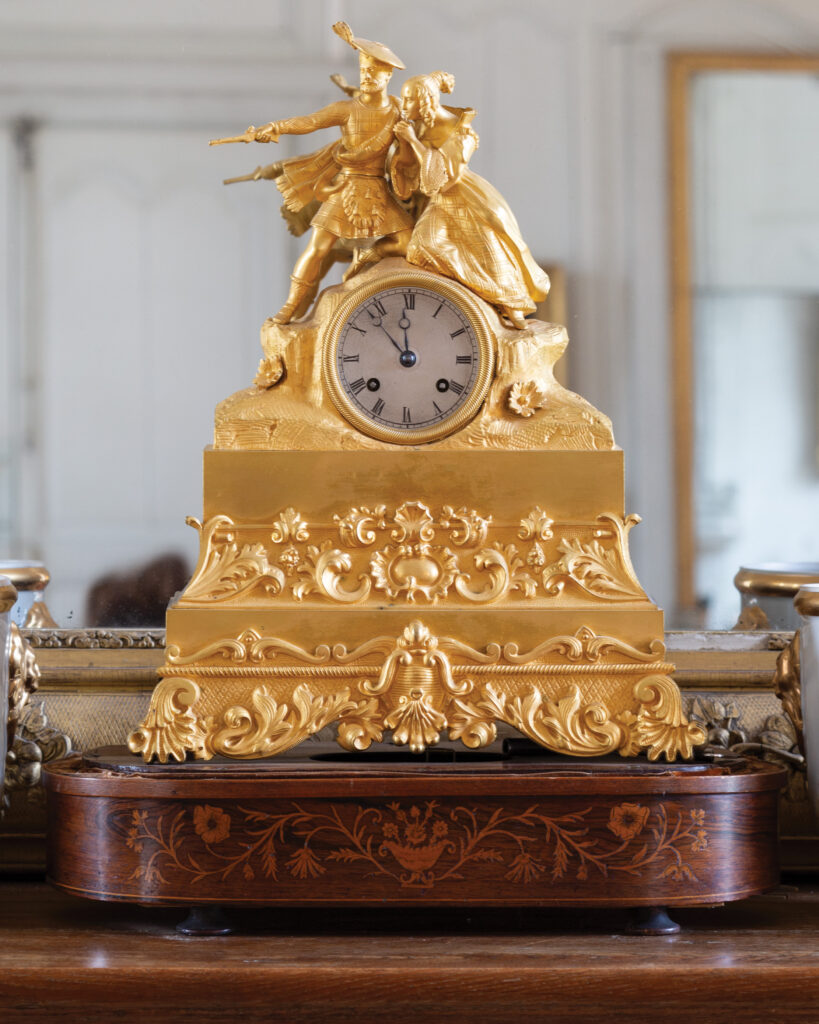 In the years before televisions and screens dominated living spaces, family members often gathered about the fireplace, where the warm embers offered reprieve from the cold outside and the gentle cadence of time was measured by a clock perched on the mantel. Many of these timepieces have been passed down through generations, their exquisite craftsmanship providing a decorative focal point for rooms while their rich histories invite conversation.
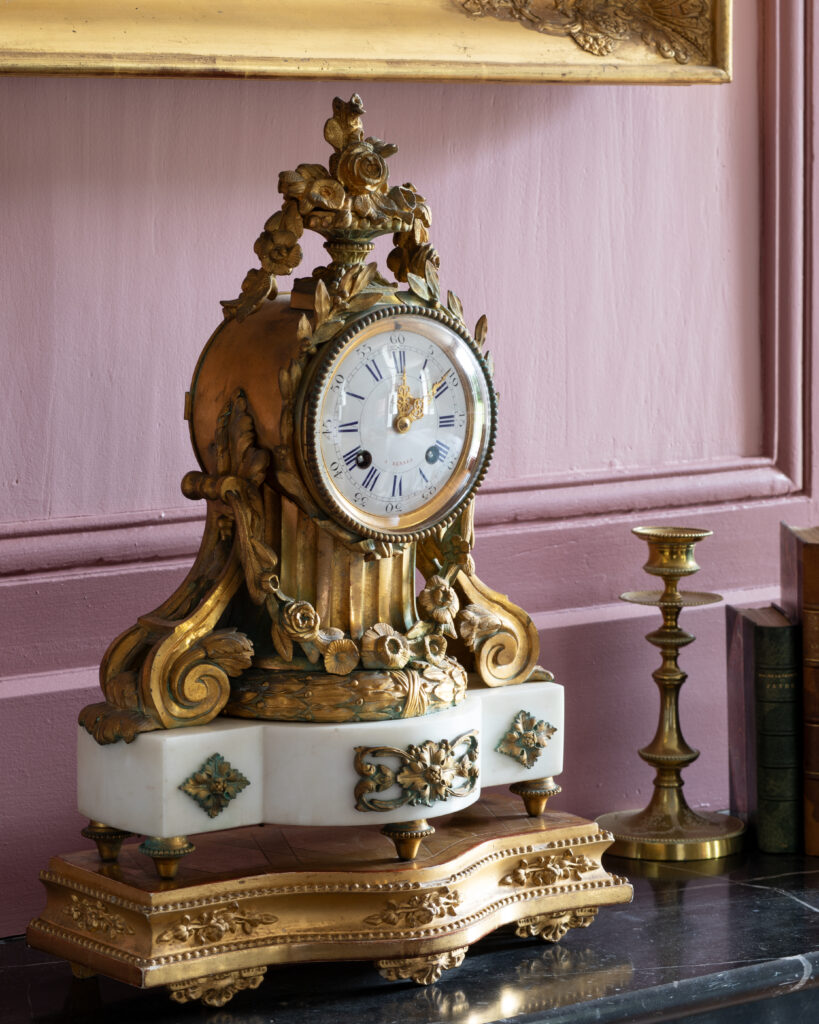 Mantel clocks became fashionable in France during the eighteenth century. Before then, the only timepieces available for an abode were tall longcase varieties such as the grandfather clock or intricately carved cartel clocks, which hung on the wall. The invention of the spring mechanism and the pendulum enabled clockmakers to develop more compact tellers of time suitable for placement on a table or mantelpiece.
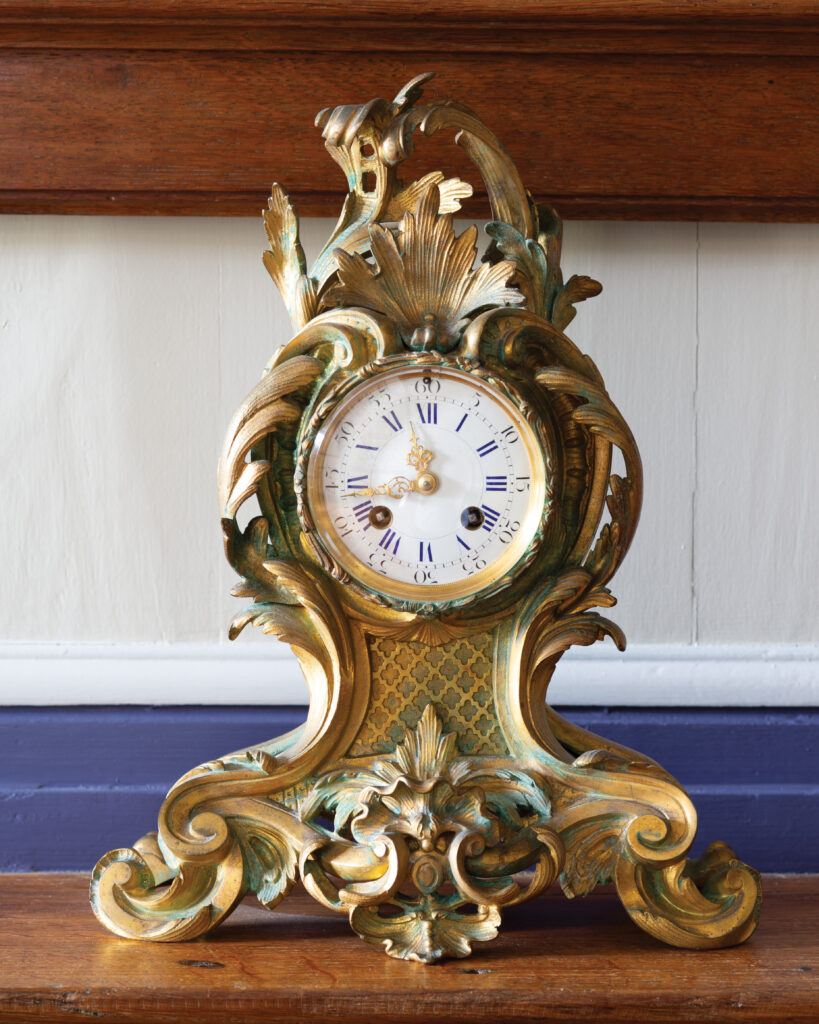 Early clockmakers in the rococo era produced sculptural mantel clocks made from gilt bronze, porcelain, and wood. Highly valued for their exquisite artistry, these creations boasted eye-catching embellishments and were renowned for their mechanical innovation. As tastes evolved in the late 1700s, French clockmakers followed suit, embracing the more restrained style, mythical motifs, and nods to classical antiquity that are characteristic of the neoclassical period. The ensuing years saw designs continue to shift in response to prevailing fashions.
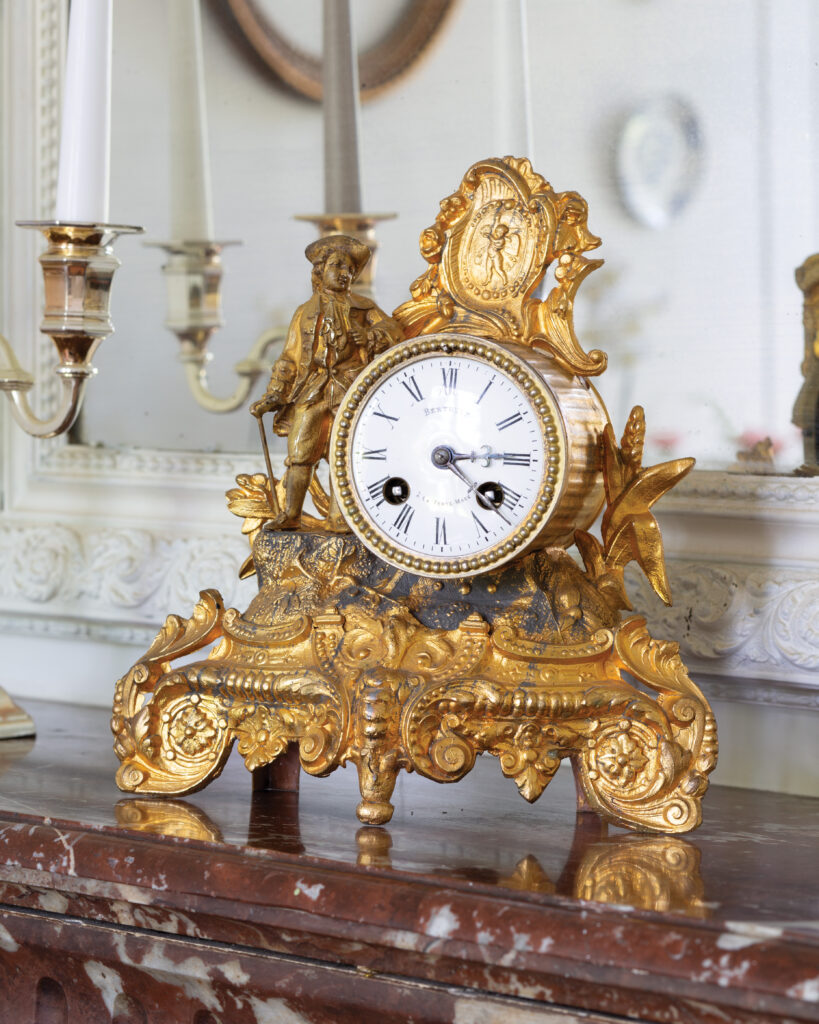 As in France, mantel clocks experienced a similar rise in popularity in England and in the United States, bolstered in great part by Connecticut clockmaker Eli Terry, who introduced a manufacturing process allowing for mass production of the objects. Following this development in the early 1800s, mantel clocks became more affordable and emerged as a prevalent fixture in many homes. Though electronic clocks and modern technological advances largely displaced the mantel clock as the principal timekeeper, these stylish sentinels of the hearth are appreciated still for their comforting appeal.
Text Audra Shalles
Styling Melissa Sturdivant Smith
Photography Stephanie Welbourne Steele
Discover more antique treasures in our January/February 2026 issue, available on local newsstands or in our online shop.